


Microreactors Research Group
About the research group
The research group deals with the use of microreactors as an intensification tool to increase the efficiency, safety and reduce the impact of chemical processes on the environment. It focuses on designing, prototyping, and experimental verification of microreactors for specific applications. This approach is based on a deep understanding of reaction and transport phenomena, with the aim of identifying rate-limiting steps and designing tailor-made solutions for industrially relevant case studies.

Photochemistry
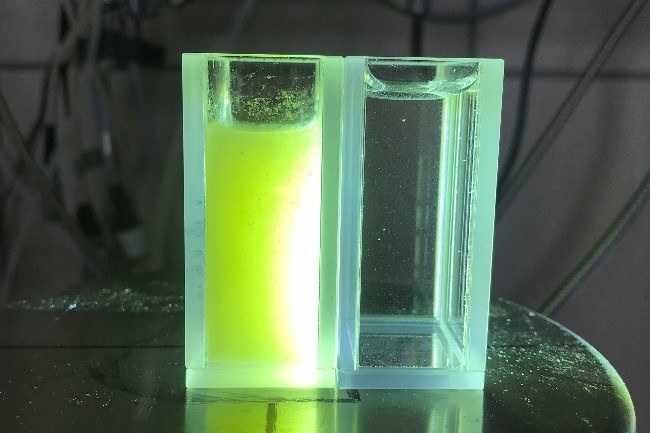
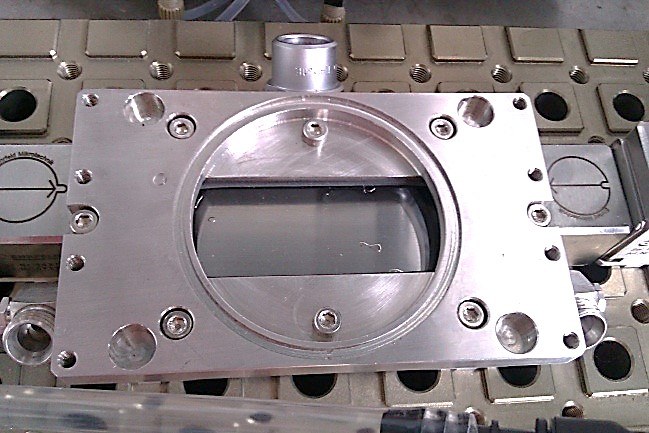
We focus on the development, testing, and characterization of highly functional thin films on the basis of graphitic carbon nitride (g‑C3N4) for visible light-induced pollutant degradation and water splitting. The goal is to obtain highly active and durable photocatalytic films with application-tailored properties such as thickness, porosity, and photocatalytic activity. The cost-effective and reproducible method synthesis for highly active g‑C3N4 is investigated. The photo activity of the prepared films is tested with a unique photo-microreactor of a slit geometry on an optical bench.
Batch-to-continous transformations
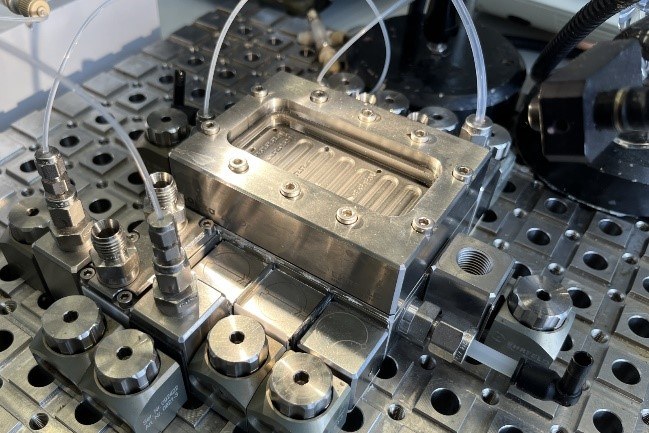

Batch-to-continuous transformation of phase-transfer catalyzed N‑alkylation reactions for the synthesis of pharmaceuticals. This case study of N‑alkylation of lysergic acid derivatives represents a fast, exothermic reaction occurring on the interface among aqueous and organic phases. Current state-of-the-art preparation includes batch process with yields of only about 80% and the use of toxic alkylation agents. Intensification of this mass-transfer limited reaction has the potential for yield increase as well as for toxic alkylation agent replacement by greener but less active alternative e.g. methyl carbonate.
3D printing in catalyst support and reactor design
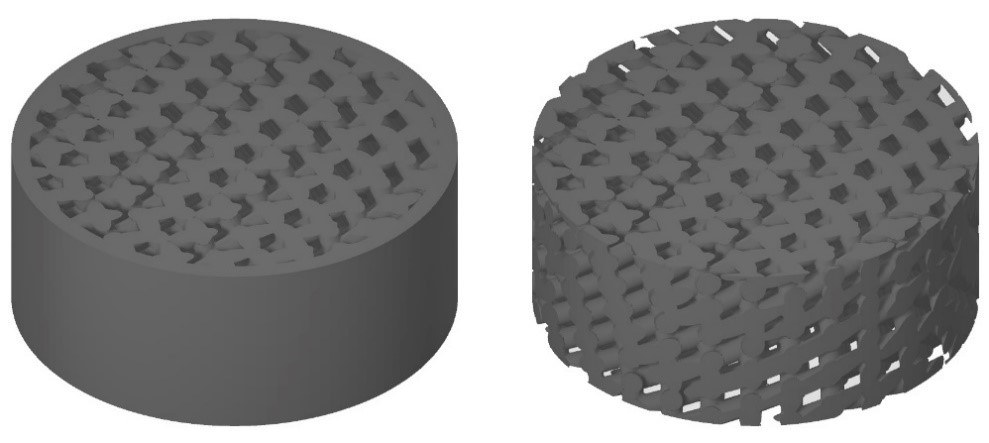
With the development of additive manufacturing technologies (3D printing), the Periodic Open Cellular Structures (POCS) are emerging as a suitable alternative to random particle beds, that represent the most utilized packed bed fillings for trickle bed catalytic reactors. POCS structures have a high potential for improving transport characteristics such as pressure drop, mass, and heat transport parameters by optimizing their geometry. The parametric set of POCS structures is designed, 3D printed, and experimentally examined for two-phase flow characteristics. The results will be compared with computational fluid mechanics (CFD) results to understand and describe the effect of geometry and topology on two-phase flow characteristics.


Jul 24, 2023

Jul 24, 2023
Members
doc. Dr. Ing. Petr Klusoň, DrSc.
Head of Research Group, Senior Researcher
Ing. Barbora Kamenická, Ph.D.
Scientist
Ing. Petr Stavárek, Ph.D.
Scientist
Mgr. Natalie Jaklová
Ph.D. Student
Ing. Dominik Schimon
Ph.D. Student
Ing. Michal Zym
Ph.D. Student
Dalibor Vlček
Research Assistant
Ing. Hana Vychodilová, CSc.
Research Assistant