Light-sensitive coatings of graphitic carbon nitride with defined porosity
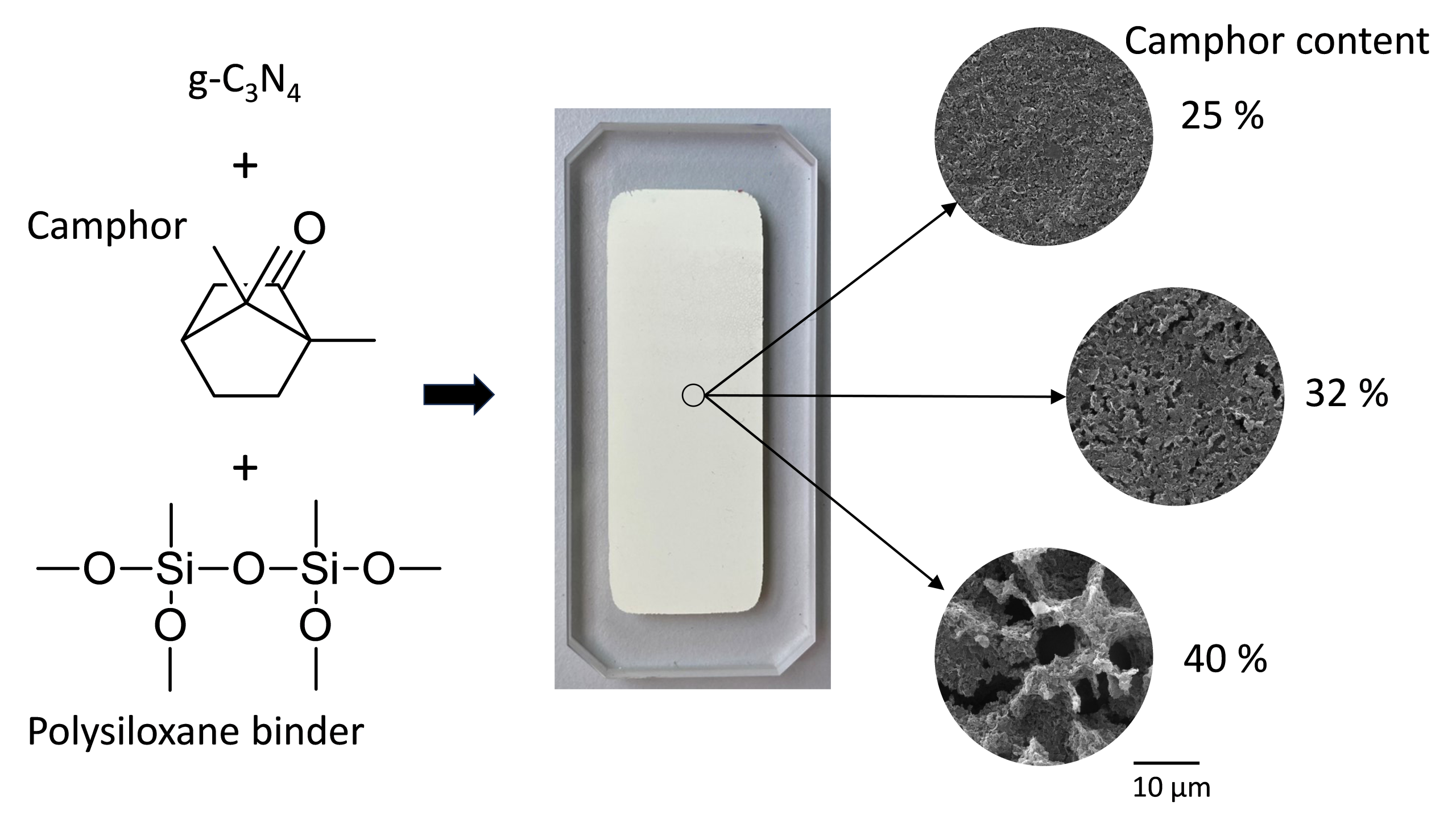 Graphitic carbon nitride (g-C3N4) is a light-sensitive material with strong potential in photocatalysis, though interpreting kinetic data in ox/redox reactions is often challenging. While fine porosity increases surface area, it is not always accessible to photons, leading to mass transport limitations instead of true kinetic control. This issue can be addressed by thin-film catalysts with surfaces directly exposed to light. Here, g-C3N4 thin films were prepared using porogenic camphor to tailor morphology and porosity, with further plasma treatment applied. Their structure and surface properties were extensively characterized. The films were tested for tetracycline oxidation in a slit-type micro-photoreactor and compared with coatings prepared without camphor and/or plasma treatment. The results show how surface engineering influences photocatalytic efficiency. Tetracycline degradation was chosen as a relevant model process due to its importance for wastewater decontamination containing pharmaceuticals.
- Schimon D., Patakyová S., Stavárek P., Dzik P., Homola T., Zažímal F., Klusoň P.: Visible-light-sensitive coatings of graphitic carbon nitride with inherent porosity induced by camphor. J. Photochem. Photobiol. A-Chem. 2025, 468(1 Nov) 116507. DOI