Here you will find a chronologically sorted list of the most important published scientific achievements.
Research Group of Algal and Microbial Biotechnology has long focused on the use of microalgae and cyanobacteria in environmental applications, including water treatment and nutrient recycling. In a newly published study, a team led by Dr. Irena Brányiková investigated the potential of the filamentous cyanobacterium Tolypothrix tenuis as a biologi…
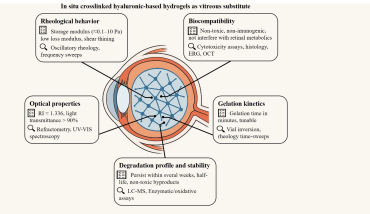
The Research Group of Bioorganic Chemistry and Biomaterials at the ICPF of the CAS led an interdisciplinary research team that developed a new class of human galectin-1 inhibitors based on organoruthenium complexes. The results were published in the Journal of Medicinal Chemistry. Galectin-1 is a protein that interacts with certain carbohydrates on…
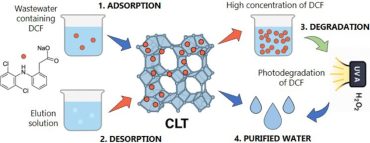
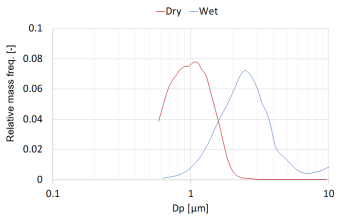
The pollution of aquatic environments by pharmaceuticals and other micropollutants represents a growing ecological problem that conventional wastewater treatment plants often cannot adequately address. A promising, low-cost, and sustainable alternative for tertiary polishing is adsorption using biochar. Although this carbonaceous material is highly…
The Research Group of Algal and Microbial Biotechnology has long been dedicated not only to the potential applications of microscopic algae in environmental and food technologies but also to the study and engineering description of fundamental biophysical and biochemical processes crucial for efficient microalgal growth. Particular attention is pai…
Heat and mass transfer from a flowing fluid to a wall is one of the fundamental problems of transport phenomena, whose precise mathematical description is considerably challenging due to the complexity of physical processes in the boundary layer. An exact theoretical understanding of these phenomena represents a powerful tool for addressing specifi…
The removal of carbon dioxide (CO2) and sulphur dioxide (SO2) from industrial flue gases is a key challenge in environmental protection and in the development of modern separation technologies. The effective capture of these gases is closely linked to the design of innovative materials and to a detailed understanding of their sorption properties fo…