Department of Materials Chemistry
Materials engineering at ICPF is a relatively new and dynamically developing field, in which we focus on the study and development of materials primarily originating from fundamental research in chemical sciences. Our teams investigate the structure, properties, and functionality of advanced materials with the aim of optimizing them for specific applications. The materials we develop find use across a broad spectrum of fields, including organic and hybrid electronics, photovoltaics, catalysis, and biomedical applications (e.g., systems for targeted drug delivery or bioactive coatings). In these areas, we actively collaborate with numerous universities, research organizations, and industrial partners both in the Czech Republic and abroad, engaging in bilateral projects as well as international research consortia. By bridging fundamental research with the application sphere, we effectively transfer new knowledge into practice and contribute to technological innovations with high added value.
 |
 |
 |
The Department of Materials Chemistry comprises three Research Groups (see Organizational Structure) focused on the following areas:
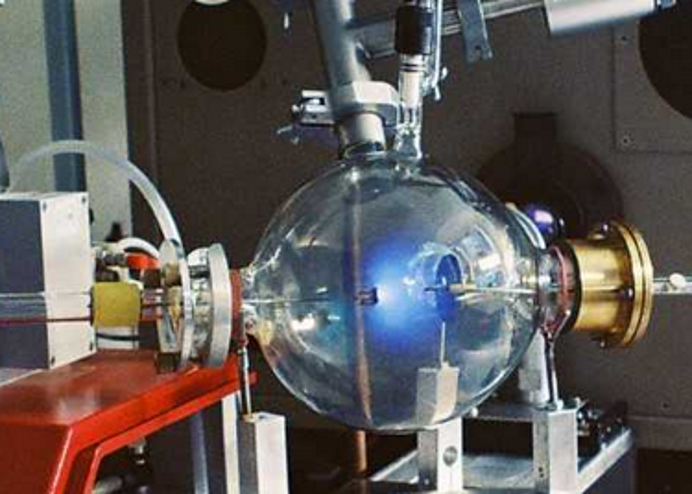
Study in the field of inorganic materials at the ICPF takes place almost exclusively in the Research Group of Laser Chemistry, which focuses on the preparation of thin layers and nanostructured materials by numerous deposition techniques. Among them, laser ablation, radiofrequency, and chemical vapor depositions are the main methods. Laboratories of the DLC are fully equipped with both vacuum deposition chambers for the preparation of new materials and analytical techniques for the characterization of the prepared materials and reaction products.
The research is focused on the deposition of material based on (i) silicon and germanium for photovoltaic applications, (ii) oxides, suboxides, oxy-carbides, and oxynitrides for photocatalytic and photoelectrochemical applications, (iii) nanostructured silicides and germanides in forms of nanoplatelets and nanowires for photocatalytic applications.
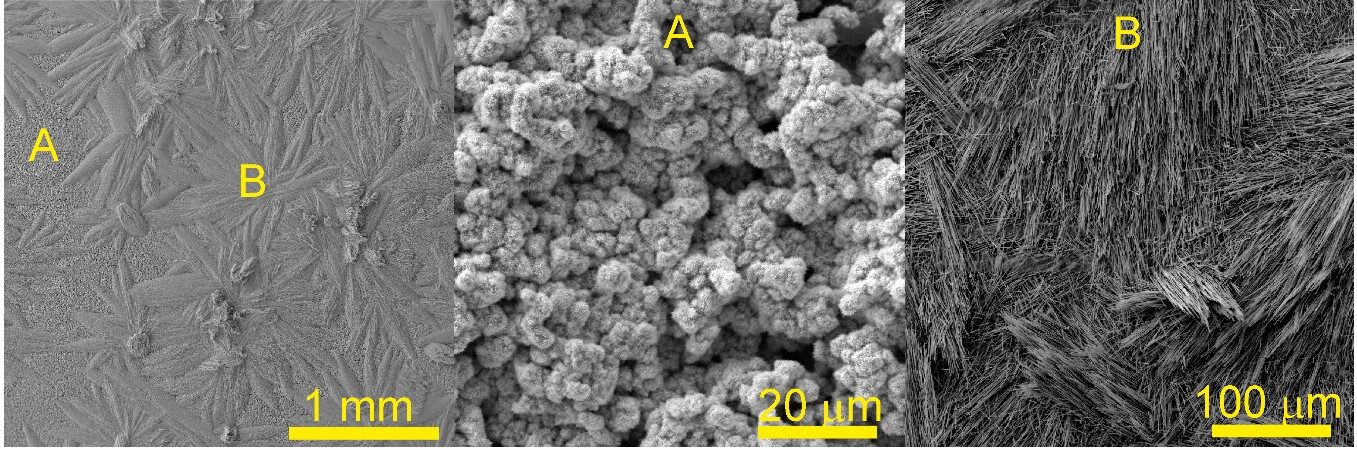
The material prepared is characterized by means of spectroscopic (Fourier-Transform Infrared, UV-Vis, Raman, photoelectron, and EDX), microscopic (scanning electron microscopy), and diffraction (X-ray powder diffractography) techniques. Gaseous and liquid samples are analyzed by means of gas chromatography and mass spectrometry. The Group affords analytical support to other departments of ICPF.
 |
 |
 |
 |
 |
 |
Other areas of our research
Department of Chemical Engineering
We are a unique chemical engineering research institution with more than 60 years of excellence in fundamental and applied research.
Department of Environmental Engineering
We leverage our expertise to develop sustainable environmental protection technologies and to study the physics and chemistry of aerosols.
Department of Materials Chemistry
We design advanced materials for electronics, photovoltaics, and biomedicine in close collaboration with industrial partners.